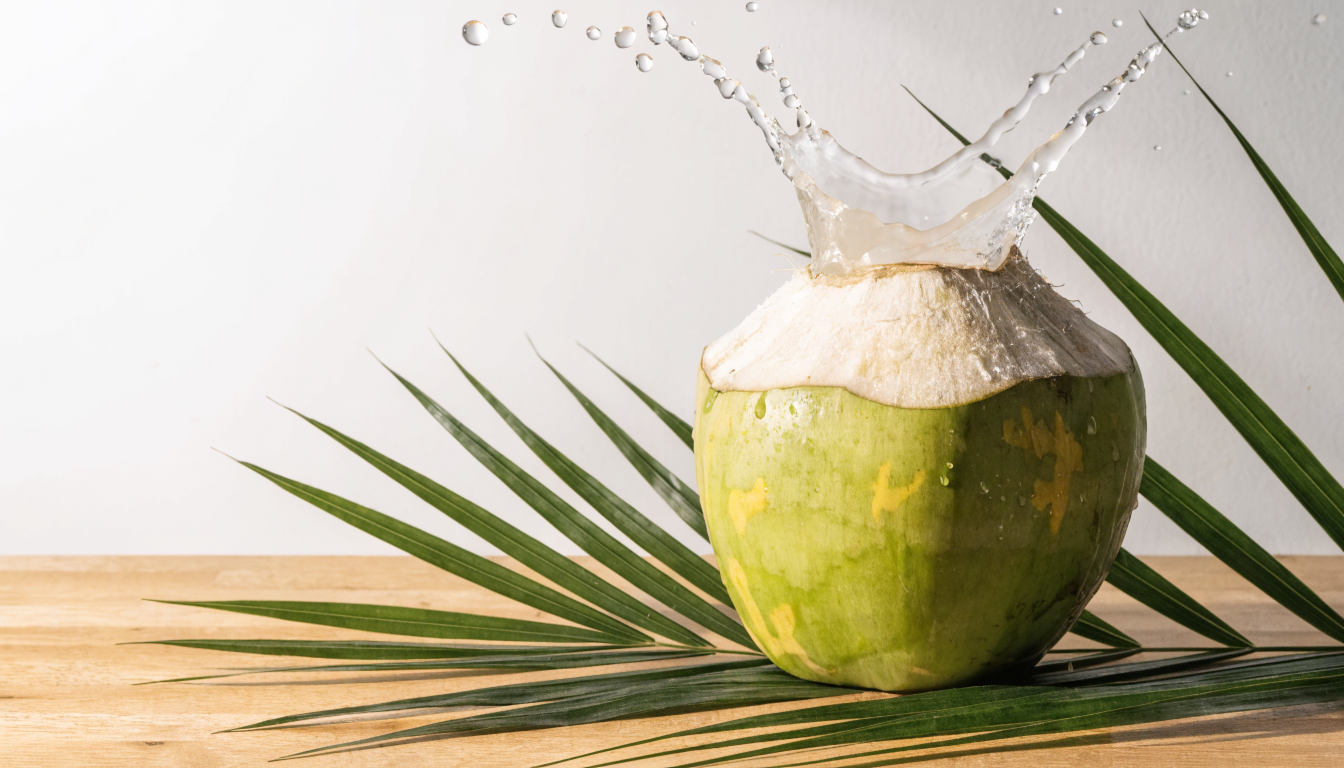
In just a few years, coconut water has gone from being an exotic trend to a staple in the sports world. And for good reason: rich in natural electrolytes, mild in flavor, and low in calories, it meets the exact needs of athletes who want to hydrate intelligently. Here are 7 concrete reasons why coconut water deserves a real place in your sports routine, along with the limitations to know before making it your workout drink.
1. A natural source of electrolytes
Coconut water naturally contains potassium, sodium, magnesium, and calcium: the four key electrolytes your body loses through sweating during exercise. Per 100 ml, it contains about 250 mg of potassium, 25 to 60 mg of sodium depending on the fruit's origin, and 25 mg of magnesium. These minerals are not incidental: they regulate the cells' water balance, enable muscle contraction, and prevent cramps.
Unlike conventional sports drinks, which provide these electrolytes in synthetic form, coconut water supplies them naturally, and they are better absorbed by the body, according to several nutrition studies.
2. Low in calories, effective for hydration
At about 19 kcal per 100 ml, coconut water is significantly lower in calories than conventional fruit juice or a sugary sports drink. For athletes monitoring their energy intake or training at moderate intensity, this is a real advantage.
It provides enough simple carbohydrates (about 4.5 g/100 ml) to support the muscles without causing a sharp rise in blood sugar. Ideal for yoga sessions, easy running, or endurance cycling.
3. It supports muscle recovery
After an intense workout, the body seeks to replenish its glycogen stores and repair the muscle fibers that have been strained. The potassium in coconut water plays a key role here: it helps the muscles relax after contraction, reduces tension, and helps reduce muscle soreness.
Consumed within 30 minutes after exercise, coconut water helps restore electrolyte balance more quickly than plain water. This is particularly useful after weight training, running, or team sports sessions.
4. A natural alternative to industrial sports drinks
Classic sports drinks often contain dyes, artificial flavors, lots of added sugar, and controversial sweeteners. Coconut water, on the other hand, needs no additives to be effective. It is a 100% natural product with no chemical processing.
More and more athletes are making this choice for health and environmental impact reasons. The trend toward natural functional beverages is clearly growing in 2026, and coconut water is at the forefront of this movement.
5. It prevents cramps during exercise
Muscle cramps during exercise are often linked to a potassium and magnesium deficiency. Coconut water is particularly rich in both. Several athletes and coaches recommend consuming 200 to 300 ml before a long workout to reduce the risk of cramps, especially during endurance sessions or in hot weather.
If you regularly suffer from cramps at the end of a match or during the second half of a race, incorporating coconut water into your pre-workout routine can make a real difference.
Cramps have a well-documented mechanism in which magnesium and potassium play the leading role. We explain this in detail in our article on cramps and electrolytes.
6. Easy to digest, even during exercise
One frequent complaint about traditional sports drinks is digestive heaviness during exercise. Coconut water is naturally light, and its moderate glycemic index makes it a drink that most athletes tolerate very well, even during intense exercise.
Its natural enzymes (amylase, peroxidase, polyphenol oxidase) also facilitate the digestion of carbohydrates consumed during exercise. A significant advantage for athletes with sensitive stomachs.
7. Rich in antioxidants to limit oxidative stress
Intense physical exercise generates free radicals that damage muscle cells: this is oxidative stress. Fresh coconut water contains natural antioxidants (vitamin C, phenolic compounds) that neutralize these free radicals and accelerate cellular recovery.
This benefit is particularly pronounced in minimally processed coconut water consumed soon after extraction. Ultra-pasteurized versions retain these antioxidant properties less effectively.
To put coconut water among the other hydration options, our electrolyte drinks guide compares what each category actually provides.
The real limitations of coconut water
An honest drink is also judged by what it does not do. Coconut water is excellent in its category, but it has two blind spots that every regular athlete should know about, plus one trap in the beverage aisle.
Too little sodium for long efforts
This is its real weakness. Sweat is primarily rich in sodium, with losses commonly ranging from 400 to 1,000 mg per liter of sweat produced, depending on the individual, the heat, and the level of acclimatization. Coconut water, however, contains only 25 to 60 mg of sodium per 100 ml, or barely 250 to 600 mg per liter consumed.
Sodium is nevertheless the mineral that helps your body retain the fluid you have just swallowed. Without sufficient intake, some of what you drink is excreted in urine instead of reaching your cells. During a long workout or in extreme heat, coconut water alone therefore does not make up for the losses. Our electrolyte powder was formulated specifically for this situation, with 252 mg of sodium and 300 mg of potassium per stick, with no sugar.
Not enough carbohydrates after an hour of exercise
After an hour of continuous exercise, your body demands carbohydrates, in the range of 30 to 60 g per hour. With 4 to 5 g per 100 ml, you would need to drink well over a liter of coconut water to approach this target, which quickly becomes uncomfortable for your stomach.
For a marathon, a long bike ride, or a trail run, it is therefore not enough on its own. It remains useful as a supplement, but your energy intake must come from elsewhere: gels, bars, a carbohydrate drink, or solid foods, depending on your tolerance.
Not all cartons on the shelf are created equal
The shelf is full of products that carry the word coconut without offering its benefits. Many products are reconstituted from concentrate, sweetened, flavored, or simply diluted with cheaper apple juice. This dilutes the mineral profile and increases the sugar content.
The habit to adopt: read the ingredient list and look for the words 100% coconut water. If sugar, flavoring, or another juice appears on the list, you're buying an exotic lemonade, not a hydration drink.
How can you incorporate coconut water into your sports routine?
Before exercise
200 to 250 ml within the 30 to 60 minutes before your workout to prepare for cellular hydration and replenish electrolytes. Particularly useful before a long workout or in hot weather, and even more so if you train in the morning or your last meal was several hours ago.
During exercise
Coconut water can replace or complement water during sessions lasting less than 60 minutes. For longer or very intense efforts (trail running, triathlon), it is best combined with a drink richer in sodium. Take small, regular sips rather than large amounts at once: your stomach will tolerate it much better.
After exercise
This is the ideal time. Drink 300 to 400 ml within 30 minutes after your workout to replenish lost electrolytes, reduce muscle inflammation, and support recovery. Pair it with a snack that provides salt and protein, and you will cover most of what your body needs in the following two hours.
For those looking to take hydration even further after exercise, Buddy coconut water-based hydration drinks combine this natural base with a complete electrolyte complex (potassium, magnesium, sea salt) for optimal recovery.
On very hot days, even without exercising
You do not need to train to lose minerals. A day at 32 degrees, a commute on crowded public transport, or a sunny terrace can make you sweat just as much as after a gym session. This is exactly the kind of situation where an intake of potassium and sodium becomes useful, whether you choose pure coconut water or an electrolyte drink.
The period after your workout is crucial. We have detailed what to drink and when in our guide to recovery after exercise.
FAQ: your questions about coconut water and sports
Is coconut water better than traditional sports drinks?
For moderately long sessions (less than 60 to 75 minutes), yes. Coconut water provides hydration comparable to sports drinks without artificial additives or excess sugar. For very long or intense efforts, it may need to be supplemented with additional sodium.
Does coconut water hydrate better than plain water?
Slightly, thanks to its minerals, which help retain the liquid you drink. The difference remains modest after mild dehydration and becomes more noticeable when you have sweated heavily. On a normal day at the office, tap water is more than sufficient.
How much coconut water should you drink per day when you exercise?
There is no universal amount, but 300 to 500 ml per day on training days is a reasonable quantity. It complements plain water and should not completely replace it.
Is coconut water suitable for all sports?
Yes, it is suitable for endurance sports as well as strength sports or gentle activities such as yoga and pilates. Its electrolyte profile makes it a versatile beverage for all types of athletes.
Does coconut water make you gain weight?
At 15 to 19 kcal per 100 ml, a 250 ml carton provides around forty calories. This is far less than a soda or fruit juice. However, sweetened versions or those blended with apple juice can double this amount, which is why it is important to read the label.
Does bottled coconut water have the same benefits as fresh coconut water?
Not quite. Pasteurization reduces some of the antioxidants and enzymes. To preserve as many benefits as possible, it is better to choose minimally processed coconut water or one incorporated into a beverage that combines coconut water with active electrolytes.
Does coconut water really help prevent cramps?
Yes, if the cramps are related to a lack of potassium or magnesium (which is common among athletes). Its electrolyte profile directly affects the mechanisms of muscle contraction and relaxation. If the cramps persist, adding a magnesium supplement may be helpful.
Can you drink coconut water every day safely?
For a healthy person, reasonable consumption poses no problem. However, if you suffer from kidney failure or take medication that affects potassium, ask your doctor for advice: the potassium content of coconut water is not insignificant.
If you are looking for a formula that combines coconut water with sufficient sodium, our electrolyte drink combines coconut juice with 300 mg of sodium, 300 mg of potassium, and 56 mg of magnesium per bottle. Its composition is compared with that of other brands on the market at drinkscore.info.
In summary
Coconut water is much more than a trend, but it is not a magic potion either. It is a natural functional beverage that meets athletes' real needs: effective hydration, cramp prevention, muscle recovery, and antioxidant intake. Its limitation is its low sodium and carbohydrate content, which makes it insufficient on its own for efforts lasting more than an hour or in hot weather. Choose a 100% pure version, save it for short sessions, recovery, and hot days, and supplement with sodium when sweating increases significantly.