Twelve hours standing in the sun, music, friends, a few drinks, and often zero water before noon. It's the perfect combo for ending the day with a headache and jelly legs. The good news is that with a little organization, you can make the most of the festival without spending the next day on the couch. We'll explain what's really happening in your body and how to keep your energy from the first concert to the last.
Why your body takes more of a beating at a festival than on a normal day
The heat, the crowds, and hours spent standing
Standing for hours in the sun or packed into a crowd makes your body temperature rise much faster than on a typical day. You sweat without realizing it, between the ambient heat and the energy you expend dancing, and that sweat carries away water as well as sodium, potassium, and magnesium. These minerals, called electrolytes, allow your muscles and brain to function normally. When they're lacking, fatigue and cramps arrive much faster. Add short nights and often poor-quality sleep in a tent or van, and you can see why your body needs a little more attention than usual over several days in a row.
Alcohol, the major dehydration accelerator
Alcohol has a well-known diuretic effect: it makes your body excrete more water than you drink. Add the heat, dancing, and a short night, and you can see why the next morning can be difficult. That's no reason to feel guilty; it's simply useful to know that every alcoholic drink should be balanced with extra water, not less.
Alcohol deserves a chapter of its own. We explain exactly how it causes you to lose sodium, potassium, and magnesium in our article on electrolytes and hangovers.
The hydration plan that really works
Before the festival: start with a good reserve
Part of it all comes down to the day before. Drink normally, without forcing yourself to down liters at once, and aim for a complete meal before you leave. A body that's well hydrated to begin with handles a long day much better than one that already starts out dehydrated.
During the festival: the pace to maintain
A simple guideline to keep in mind: around a quarter to half a liter of water per hour, and more if the temperature rises above 30 degrees or you're dancing through one concert after another. Alternate water with an electrolyte drink as soon as the day involves more than an hour or two of exertion, especially in hot weather. This isn't just for athletes; your body loses the same minerals whether you're on a sports field or in front of a stage. The best approach is to set a regular rhythm, such as taking a few sips between each song or at every stage change, rather than relying on your memory to remember once the evening is well underway.
The role of electrolytes in all this
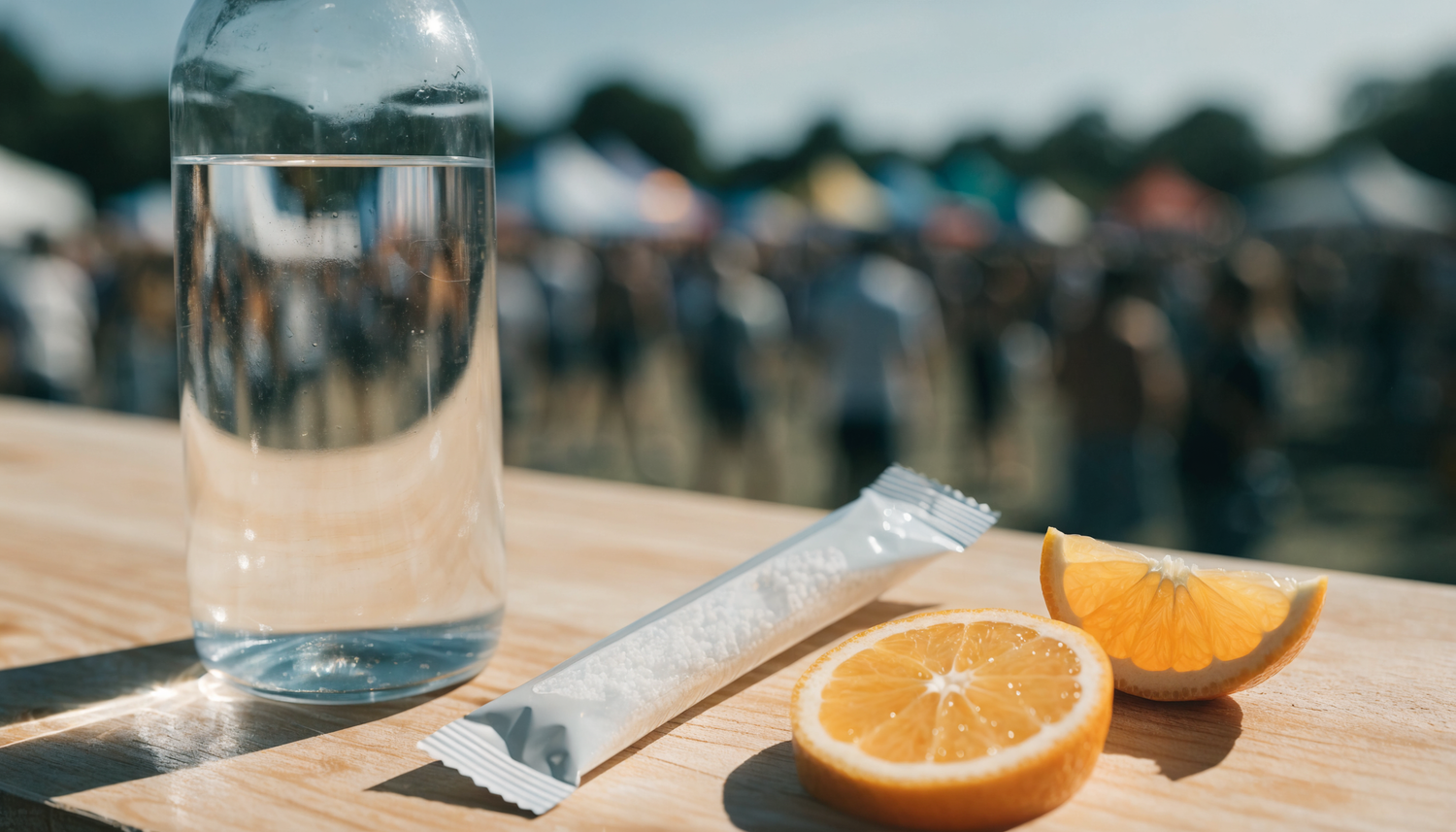
Water alone isn't always enough, especially when you sweat heavily for several hours. Electrolytes help your body retain the water you drink instead of simply excreting it, and they limit cramps and energy slumps at the end of the day. That's exactly why we designed Buddy electrolyte sticks in a format that's easy to slip into a pocket or small bag, with no added sugar and containing potassium, magnesium, and sea salt. Add one stick to a bottle of water and you have a drink that really helps you go the distance.
To understand when a mineral drink is truly justified and when a glass of water is enough, our electrolyte drink guide lays it all out.
What it's better to avoid
Very sugary sodas give an impression of freshness but slow the body's absorption of water, which doesn't really help over time. The same goes for very salty food late at night; it can have a delayed effect the next morning. And if you can, try to avoid having one alcoholic drink after another without a glass of water in between; your body will thank you when you wake up. Another classic trap is waiting until you're really thirsty to drink. Thirst is already a sign of deficiency, so it's better to drink small, regular sips throughout the day rather than wait for that signal.
If a heatwave arrives over the weekend, the guidelines change again. We explain them in detail in our article on what to drink during a heatwave.
What to pack in your bag before you leave
A reusable water bottle instead of small bottles
Most festivals offer free water stations for refilling your bottle. One 500 ml to 750 ml bottle is more than enough if you refill it regularly, rather than chasing after bottles sold at inflated prices on-site.
A few electrolyte sticks in a small pocket
Since they weigh almost nothing and take up no space, two or three sticks are enough to cover a full day. Keep them for when fatigue starts to set in, generally mid-afternoon or just before the last stage of the evening.
A cap or hat, a detail that changes everything
Protecting yourself from direct sunlight reduces the amount of water your body has to use to cool itself down. Combined with good hydration, this small step helps you keep your energy for longer without changing anything about your day's plans.
When it comes to sticks, our electrolyte powder provides 252 mg of sodium, 300 mg of potassium, and 56 mg of magnesium per serving, with no sugar, and fits in a pocket. Its nutritional content is compared with that of other brands on drinkscore.info.
FAQ: your questions about festival hydration
How much water should you drink during a festival?
Aim for around two to three liters spread throughout the day, drinking regularly rather than large amounts at once. Increase this amount if it's very hot or you're dancing a lot.
Does alcohol really dehydrate you as much as people say?
Yes, alcohol makes the kidneys excrete more water than usual. That's no reason to stop altogether, but every drink should be followed by some water or an electrolyte drink.
Are electrolytes useful even if you aren't exercising?
Absolutely. Standing for hours in the sun, dancing, and sweating in a crowd causes you to lose the same minerals as during physical exertion. The body doesn't distinguish between a concert and a workout.
How can you avoid the next-day slump after a festival?
The secret is to make up the deficit before going to sleep, not the next morning. A large glass of water with electrolytes before bed often makes all the difference to how you feel when you wake up.
Can you bring electrolyte sticks to a festival?
Yes, that's exactly what makes them useful. A stick weighs almost nothing, fits in a small pocket, and can be poured directly into a bottle of water on-site, with no equipment or preparation.
In summary
A successful festival depends just as much on hydration as on the playlist. Drink regularly, alternate water and electrolytes whenever heat or dancing enter the picture, and balance every alcoholic drink with extra water. Your body will go the distance, and you'll thank yourself the next morning.