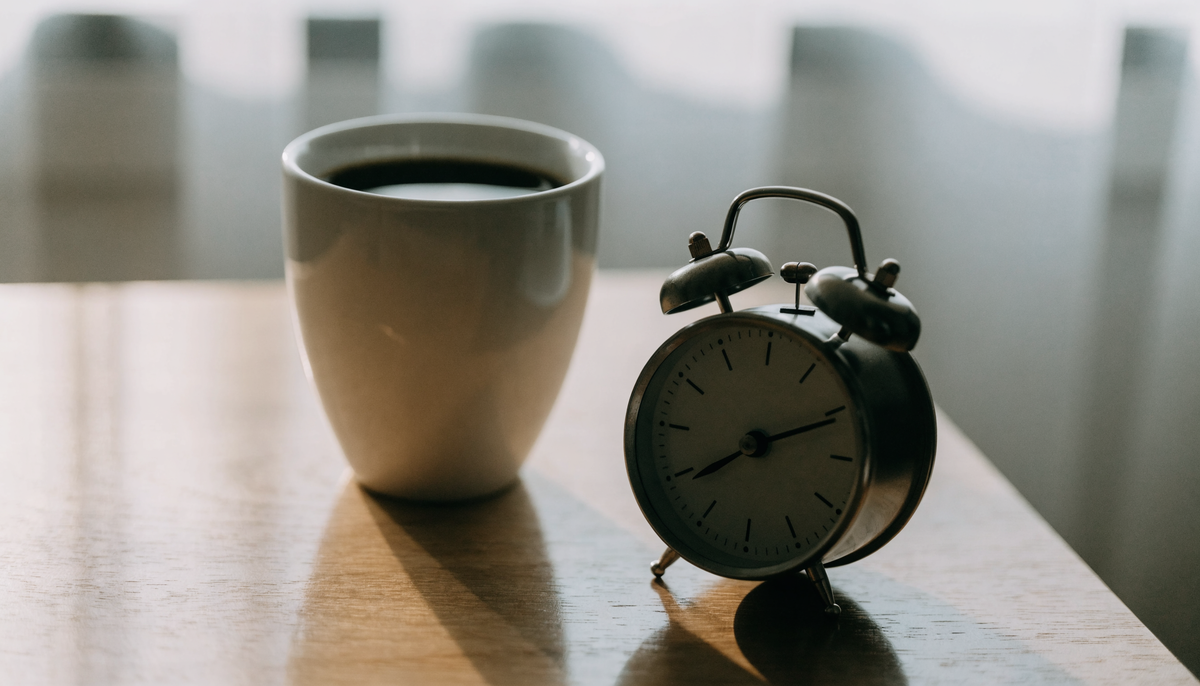
You sleep poorly and suspect your 4 p.m. coffee. You're probably right. Caffeine stays in your body much longer than the boost it provides feels, and it continues to work silently while you try to fall asleep. Here's how to calculate your cutoff time, understand what's really happening in your body, and keep your energy without sacrificing your nights.
How long caffeine stays in your body
Five hours to eliminate half of it
When you drink coffee, caffeine enters your bloodstream within 15 to 30 minutes and reaches its peak between 30 and 60 minutes. The stimulating effects you feel generally last 3 to 5 hours. That's the catch: no longer feeling the caffeine absolutely does not mean it has left your body.
Your liver takes about 5 hours to eliminate half of the dose you've consumed. In practical terms, if you drink a beverage containing 80 mg of caffeine at 4 p.m., 40 mg is still in your bloodstream at 9 p.m., and 20 mg around 2 a.m. Those 20 mg no longer keep you consciously awake, but they still occupy the brain receptors that are supposed to trigger the sensation of fatigue. As a result, your brain receives a weaker sleep signal without you realizing it.
For near-complete elimination, allow 10 to 12 hours after the last sip. In some people, traces persist for up to 14 hours.
Why it varies so much from one person to another
It all comes down to a liver enzyme called CYP1A2, whose activity largely depends on your genetics. Fast metabolizers eliminate caffeine in 2 to 3 hours and can drink an espresso after dinner without consequences. Slow metabolizers take 8 to 9 hours to eliminate the same dose and pay a high price for a simple late-day tea.
Several factors further affect this rate:
- The contraceptive pill and hormone treatments can double the elimination time
- Smoking markedly speeds up caffeine breakdown
- Pregnancy significantly slows the process
- Age also plays a role: after 50, elimination generally becomes slower
- Drinking caffeine on an empty stomach or with a meal changes the absorption rate, not the overall duration
If you don't know which category you fall into, here's a simple clue: does having a coffee at 3 p.m. make it harder for you to fall asleep at night? You're probably a slow metabolizer.
Your cutoff time based on your bedtime
The 6-hour rule, and why it often isn't enough
The most widely cited recommendation advises leaving 6 hours between your last caffeine intake and bedtime. It comes from a study published in the Journal of Clinical Sleep Medicine in which a 400 mg dose, roughly equivalent to four filter coffees, taken 6 hours before bedtime, still reduced sleep duration by about an hour. The thought-provoking detail: the participants did not perceive this deterioration. They thought they had slept well.
More recent analyses combining several studies suggest an even longer delay, close to 9 hours, for an amount equivalent to a large coffee. In other words, the 6-hour rule is a minimum, not a target.
Your cutoff time in practice
Here are some simple guidelines to apply starting tonight, aiming for an 8-hour gap for a standard dose:
- Going to bed at 10 p.m.: last caffeine at 2 p.m.
- Going to bed at 11 p.m.: last caffeine at 3 p.m.
- Going to bed at midnight: last caffeine at 4 p.m.
- Going to bed at 1 a.m.: last caffeine at 5 p.m.
If you are sensitive, move it one or two hours earlier. If you eliminate it quickly, you can gain an hour. The best test is still your own sleep over a week of observation.
The source of caffeine also affects how it is absorbed. We compared the two in our article on natural and synthetic caffeine.
What caffeine really changes during your night
It takes you longer to fall asleep
Caffeine blocks adenosine receptors, the molecule that builds up in your brain throughout the day and creates sleep pressure. As long as the receptors are occupied, your brain does not receive the message. Adenosine, meanwhile, continues to build up. This is why fatigue suddenly returns when the effect wears off.
Your deep sleep takes a hit
Even when you fall asleep normally, caffeine reduces the proportion of deep slow-wave sleep, the phase during which your body physically recovers, consolidates memories, and regulates hormones. So you can sleep for 8 hours and wake up without having truly recovered. This is the most common scenario among heavy coffee drinkers who swear that caffeine has no effect on them.
The next-day vicious cycle
Less restorative sleep, a difficult wake-up, needing a stronger coffee later in the day, and an even shorter night. The cycle sets in within a few days and becomes very difficult to break without a reset. The good news: simply moving the cutoff time earlier is often enough to break the spiral within a week, without reducing the amounts.
If your problem occurs more around the middle of the day, the afternoon slump has its own causes. We reviewed them in our article on the post-lunch slump.
How to maintain your energy without disrupting your sleep
Opt for caffeine with a gentler rise
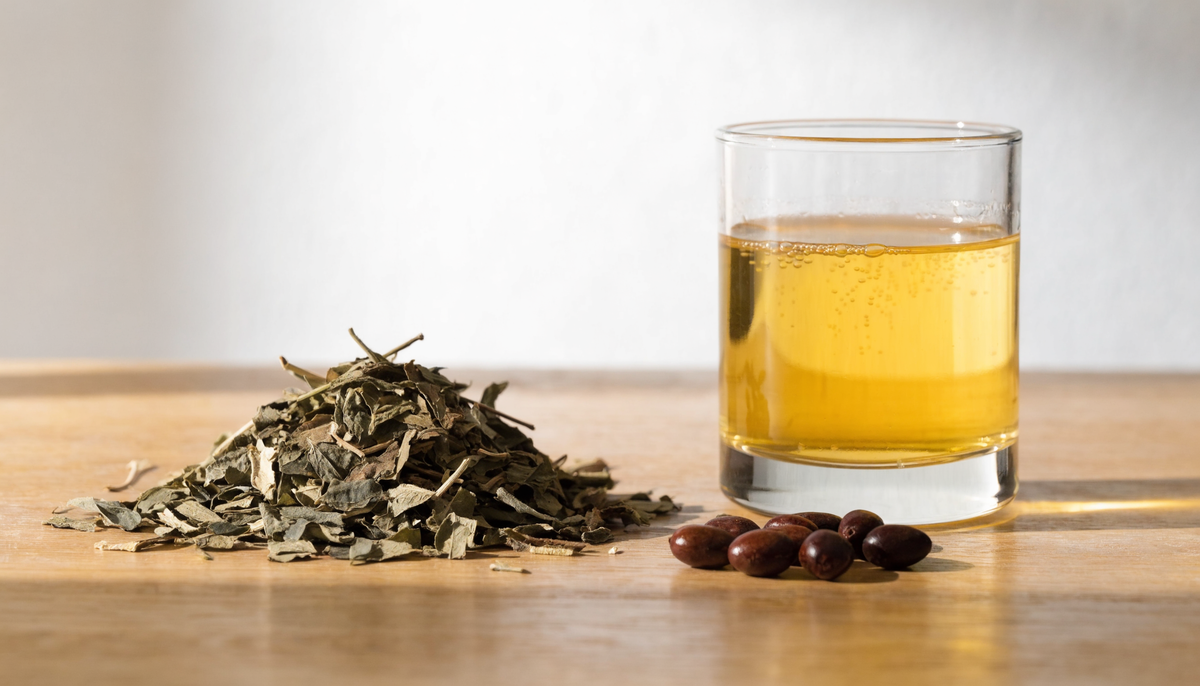
Not all sources of caffeine behave the same way. Filter coffee delivers a massive dose within a few minutes, with a sharp peak followed by a sudden drop. Plant sources such as guarana or yerba mate release their caffeine more gradually, partly thanks to tannins and saponins, which slow absorption. You get a steadier energy boost, with less nervousness and less of a crash as the effects wear off.
The amount matters just as much as the source. A can containing 80 mg of natural caffeine is roughly equivalent to an espresso, far below the 200 to 300 mg that some classic energy drinks pack into a single can. If you're looking for this kind of dosage, Buddy natural energy drinks are right in this area, with guarana and ginkgo biloba rather than a load of synthetic caffeine.
Delay rather than eliminate
Stopping abruptly causes headaches, irritability, and marked fatigue for 2 to 9 days. There's no need to go through that. Simply concentrate your intake during the first part of the day. Ideally, wait 60 to 90 minutes after waking up before having your first coffee: your morning cortisol is already doing some of the work, and you avoid developing tolerance more quickly.
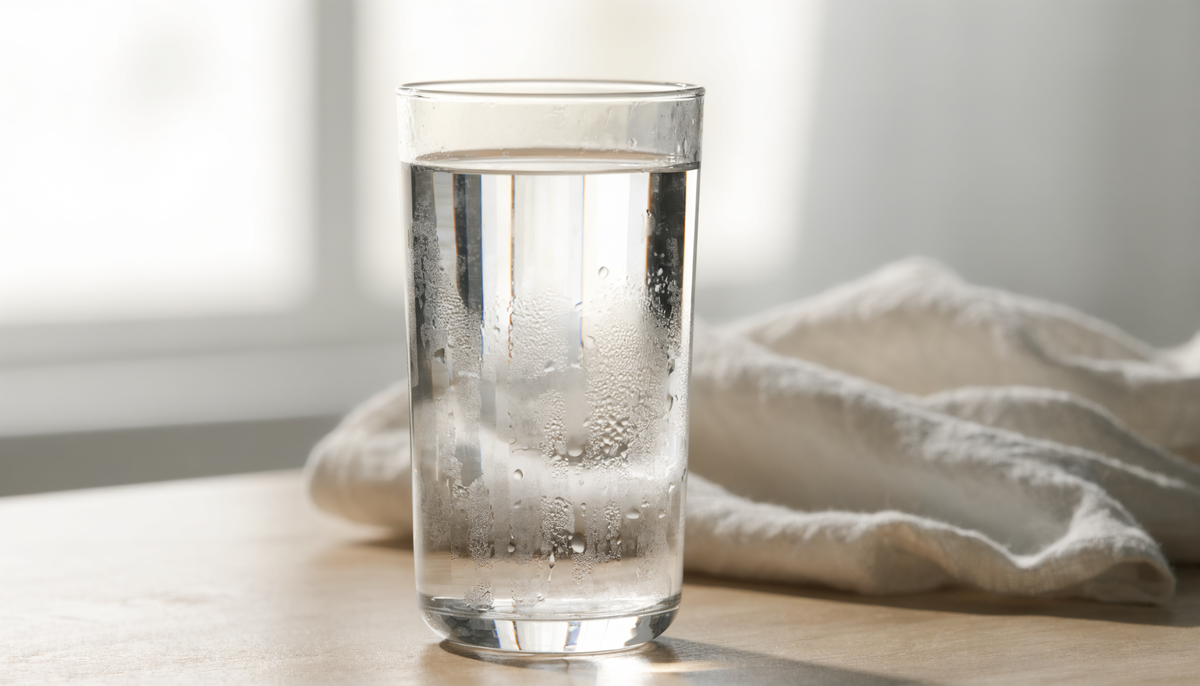
If you feel like drinking something at the end of the day, an herbal tea, rooibos, or simply some ice-cold water can replace the ritual without the stimulant. Many people actually confuse a need for caffeine with mild dehydration, especially in summer.
Track down hidden sources
Coffee isn't the only culprit. Remember to check:
- Black and green tea, between 30 and 60 mg per cup
- Dark chocolate, approximately 25 mg per 50 g at 70% cocoa
- Cola soft drinks, around 35 mg per can
- Pre-workout supplements, often exceeding 200 mg per serving
- Some painkillers that combine paracetamol and caffeine
Add everything up over a typical day. The surprise is often waiting for you.
For the end of the day when you want to stay productive without consuming caffeine, our article on energy without coffee offers five alternatives. And if you want to check the actual amount of caffeine in energy drinks on the market, everything is published at drinkscore.info.
FAQ: your questions about caffeine and sleep
I fall asleep just fine after an evening coffee. Does that mean I can keep doing it?
Not really. Falling asleep quickly says nothing about the quality of the sleep that follows. Laboratory measurements show a reduction in deep sleep even in people who notice no difficulty falling asleep. The best indicator remains how you feel when you wake up and in the middle of the morning.
What time should I stop drinking coffee if I go to bed at 11 p.m.?
Aim for 3 p.m. for a standard dose, which is about 8 hours before bed. If you're sensitive to caffeine, move it back to 1 or 2 p.m. If you eliminate it quickly, 4 p.m. may be enough.
Does decaf really contain caffeine?
Yes, but very little. Decaf contains between 2 and 5 mg per cup, compared with 80 to 120 mg for regular coffee. At that dose, the impact on sleep is negligible for the vast majority of people.
How much caffeine per day at most?
The European Food Safety Authority considers 400 mg per day a safe limit for a healthy adult, and 200 mg in a single dose. During pregnancy, the recommendation drops to 200 mg per day. Adolescents should stay well below that.
Does yerba mate and guarana disrupt sleep as much as coffee?
They do contain caffeine, so the cutoff-time rule applies in the same way. The difference lies in the curve: more gradual absorption avoids a sudden spike and jitters. At the same dose and time, the effect on sleep remains comparable.
Our Buddy cans provide 80 mg of caffeine from guarana and 13 kcal per 100 ml, making them easy to factor into your daily total.
Key takeaways
Caffeine lasts much longer than you feel its effects. Set a cutoff time around 8 hours before bed, add up all your sources throughout the day, and favor reasonable doses over overloaded formats. You don't need to quit coffee to sleep better. Most of the time, simply moving it two hours earlier in your day is enough.