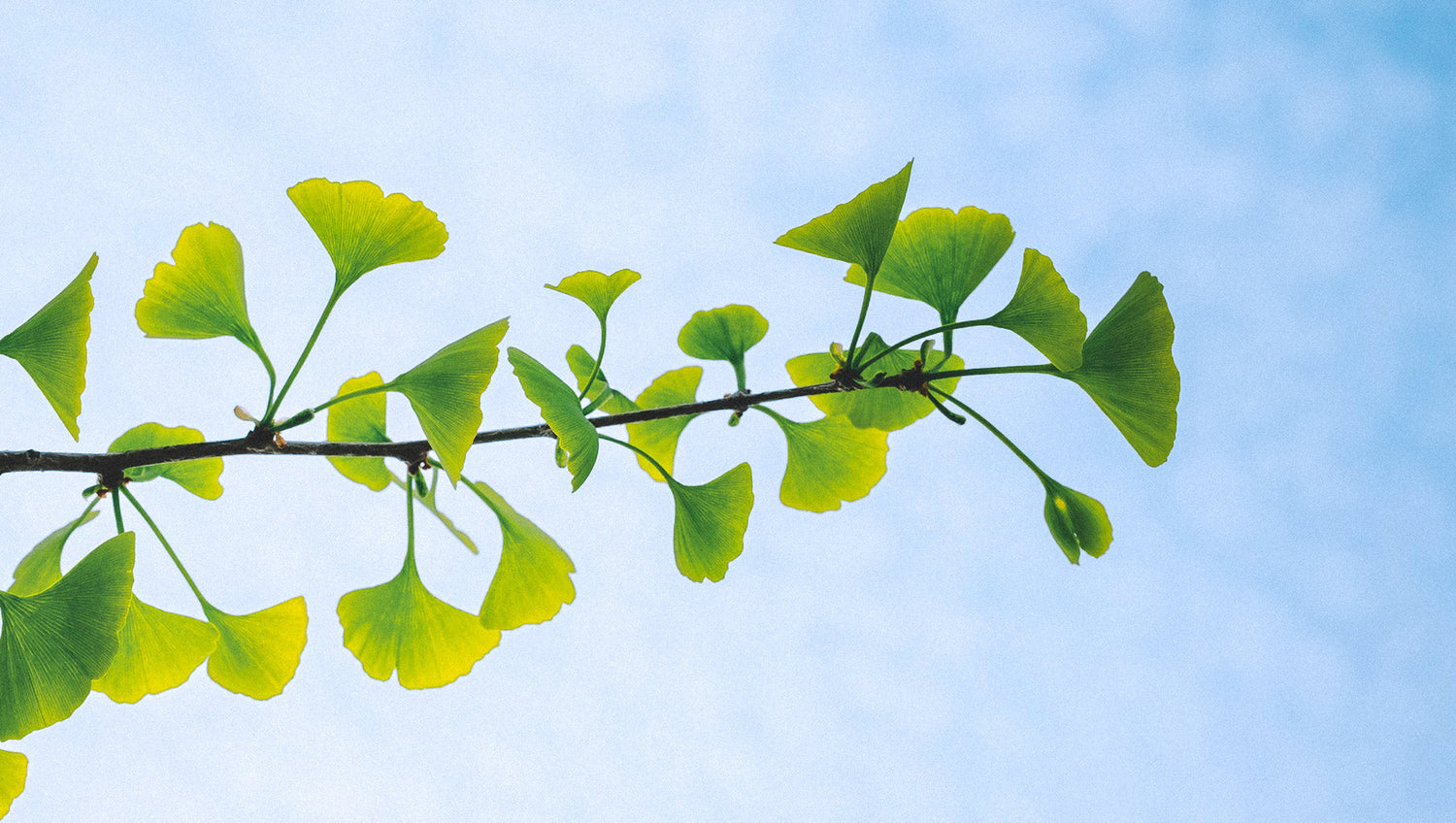
Increasingly present in the wellness world, Ginkgo Biloba is an ancient plant, one of the most studied in the world for its connection with circulation and cognitive functions. Here is what is known about its compounds, what is still being researched, and why we combined it with guarana in our cans.
What we know about ginkgo biloba
A subject of research on cerebral circulation
Ginkgo biloba has been studied for decades for its effects on microcirculation, including cerebral circulation. The available research most often concerns standardized extracts at high doses, in a therapeutic setting, and its results remain debated. To date, no health claim is authorized in Europe for this plant in food products: we prefer to state this clearly rather than repeat the shortcuts found elsewhere.
A natural wealth of polyphenols
Ginkgo is naturally rich in polyphenols, a family of plant compounds widely studied in nutrition research. This is one of the reasons why the plant is of such interest to functional beverage formulators.
A plant associated with active lifestyles
Traditionally, ginkgo has been used during periods of intense mental demands. It is in this spirit that it is included in formulas designed for busy days, alongside a source of caffeine which, for its part, contributes to concentration and alertness from 75 mg per serving.
Ginkgo is one of the most studied natural nootropics. We place its effects among those of other active ingredients in our natural nootropics guide.
Bioactive compounds that hold up well
Flavonoid glycosides
Flavonoid glycosides, particularly quercetin and myricetin, are among the main compounds in ginkgo biloba. Unlike other plant molecules, they withstand infusion well and remain present in the final beverage.
Lactone terpenes
Ginkgo also contains unique lactone terpenes, ginkgolides and bilobalides. These are the molecules on which most research focuses, and they remain stable in ready-to-drink beverages.
The benefits of combining it with other plants
Ginkgo biloba is rarely used alone. It is most often combined with other adaptogenic or nootropic plants to create balanced formulas rather than relying on a single active ingredient.
The most common combinations
- Ginkgo and guarana: natural caffeine with gradual release, without a spike or sudden crash.
- Ginkgo and bacopa: a classic combination in traditional herbal medicine.
- Ginkgo and tulsi: two plants associated with periods of tension.
- Ginkgo and L theanine: the duo known for calm alertness.
The combination of ginkgo and guarana is at the heart of the Buddy formula. The guarana provides the can's 80 mg of natural caffeine, whose gradual release helps avoid a crash, while the ginkgo complements the formula. Discover our range of natural beverages.
As for guarana itself, its dosages and limitations, everything is covered in our dedicated article: guarana.
A balanced plant-based taste
Ginkgo biloba has a naturally slightly bitter and earthy flavor, a sign of its richness in active compounds. Rather than masking this flavor with sugars or additives, it is often combined with fresh and fruity notes, such as citrus, to create a more harmonious and refreshing flavor profile.
To place this approach within the wider market, our article on the benefits of yerba mate discusses another source of natural caffeine, while the actual compositions of energy drinks sold in Belgium, including ours, are published on drinkscore.info.
Safety and consumption recommendations
Ginkgo biloba is an active plant. Its consumption should therefore be accompanied by a few simple precautions:
- It may interact with certain treatments, particularly blood thinners.
- It is not recommended for pregnant or breastfeeding women.
- It is recommended to stop consuming it before surgery.
Ginkgo-based beverages are designed for moderate daily consumption, suitable for healthy adults. If in doubt or if you are undergoing treatment, ask a healthcare professional for advice.
FAQ: your questions about ginkgo biloba
Does refrigeration affect ginkgo compounds?
No. On the contrary, cold helps preserve its active compounds.
Can it be consumed at the same time as coffee?
Yes, but it is preferable to monitor the total amount of caffeine consumed during the day, keeping in mind the limit of 400 mg per day for a healthy adult.
Is it suitable for teenagers?
Ginkgo is primarily intended for adults. Data on young people is still limited, and our cans also contain caffeine.
Does ginkgo contain caffeine?
No, none at all. In our cans, the caffeine comes exclusively from guarana. Ginkgo is there to complement the formula, not to stimulate.
Natural energy by Buddy
Ginkgo biloba is a plant apart, one of the oldest in the world and one of the most studied. By combining it with organic guarana, Buddy offers a short, transparent formula without additives, rather than a long list of active ingredients.
To discover the range, visit our online store.